

VIPER Environmental Test Systems for Vapor Intrusion Mitigation Design
VIPER Environmental Test Systems help FullTerra design vapor intrusion mitigation systems with real-time site data instead of relying on assumptions. By capturing pressure field extension, or PFE, data as testing occurs, our team can evaluate how a mitigation system is likely to perform before construction begins.
That means faster decisions, more precise system layouts, and fewer unexpected issues once installation is underway.
When your project depends on verified performance, regulatory confidence, and long-term system reliability, VIPER gives you a clearer path from testing to design.

See how your mitigation system may perform before it is installed. VIPER gives project teams real-time insight that helps remove guesswork, speed up decisions, and support more confident vapor intrusion mitigation planning.
What Is the VIPER Environmental Test System?
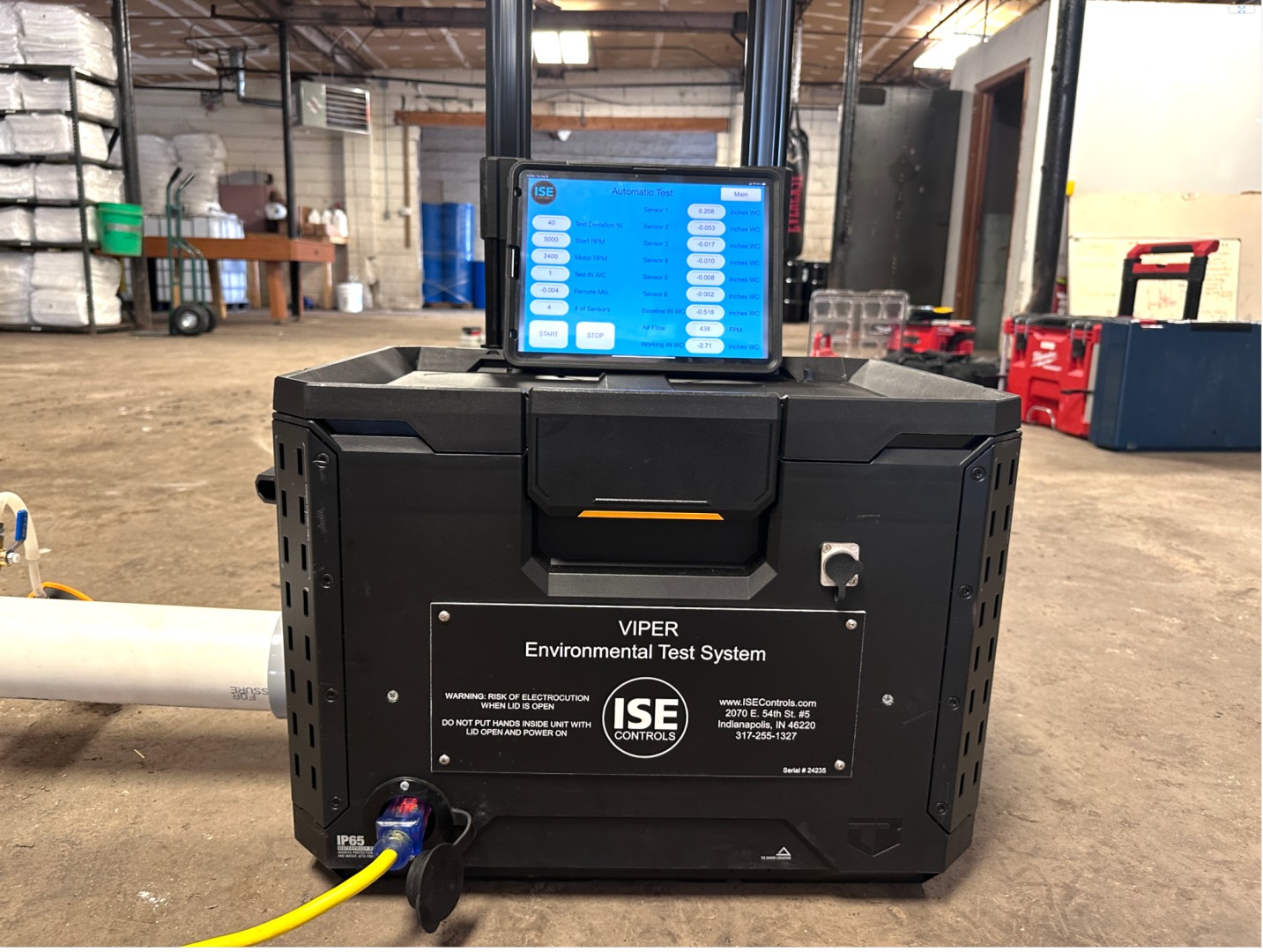
The VIPER Environmental Test System is a proprietary testing platform used to measure pressure field extension in real time. Put simply, it helps simulate how a vapor intrusion mitigation system will perform by emulating multiple extraction points and tracking how air moves beneath the building slab.
Traditional pressure field extension testing usually depends on creating a vacuum at one point, taking manual readings, and repeating that process throughout the site. VIPER improves that process by collecting continuous data in real time, allowing FullTerra to evaluate system performance as testing is happening.
Instead of waiting hours or days to review results, our team can see how the subsurface responds during the test itself. That visibility helps improve both the speed and accuracy of the final mitigation system design.


Why Manual Vapor Intrusion Testing Can Limit the Design Process
Many pressure field extension tests are still performed manually. Technicians test one point at a time, record individual readings, and then organize the data later to determine how the mitigation system should be designed.
That approach can create several challenges, including:
Limited data collected across the full testing area
Slower interpretation of results
More labor required on-site
Longer testing and design timelines
Greater risk of overlooking critical performance areas
In some cases, system design decisions are made with incomplete information because collecting additional data manually would slow the project down too much.
VIPER helps remove those limitations. By collecting high-resolution data across multiple points at once, the system creates a clearer picture of subsurface conditions without adding unnecessary delays to the project timeline.
How VIPER Helps FullTerra Design Better Mitigation Systems
VIPER turns testing from a static, point-in-time process into a real-time performance model.
By measuring pressure field extension, or PFE, as testing happens, FullTerra can better determine:
How far each extraction point influences the subsurface
Where additional extraction points may be needed
Where extra points may not be necessary
Which fan sizes and flow rates are best suited for the site
This allows FullTerra to design vapor intrusion mitigation systems with more precision before installation begins.
On complex commercial and industrial sites, that kind of insight matters. Rather than overbuilding a system to compensate for uncertainty, or designing too conservatively based on limited readings, we use actual site behavior to guide the system layout.
The result is a mitigation system designed to perform as intended, with fewer unnecessary adjustments after installation.
What Real Time VIPER Data Means for Your Project
VIPER does more than improve testing. It helps improve the entire vapor intrusion mitigation process.
With real-time data guiding the design, your project can benefit from:
Faster turnaround times
Testing, evaluation, and design decisions can happen in a tighter window instead of being spread out over multiple days.
More accurate system design
Extraction point placement, fan sizing, flow rates, and system layout are based on actual site performance data rather than assumptions.
Lower risk of system underperformance
By evaluating performance before installation, FullTerra can reduce the risk of system failure, weak coverage areas, or costly redesigns.
More efficient project costs
More data collected in less time can reduce repeat visits, lower labor demands, and help project resources go further.
Cleaner reporting and communication
VIPER data can be organized for analysis and visualization, making it easier to communicate findings with consultants, stakeholders, and regulators.
For projects where delays, redesigns, or underperforming systems carry real cost, better testing data can change the entire outcome.
Real World Results with VIPER Testing
The value of VIPER becomes clear once testing begins.
On one project, real-time testing identified two optimal performance zones beneath the slab. A traditional testing approach may have missed those areas or taken much longer to uncover them. That information helped improve the system design and overall coverage.
On another site, previous testing suggested that a sub-slab depressurization system, or SSDS, would not be effective. Using VIPER, FullTerra identified that a sump pit was limiting performance. After adjusting the approach to focus vacuum on the sub-slab soil gas layer, the pressure field extension improved significantly, turning what appeared to be an unworkable design into a viable mitigation solution.
In another case, FullTerra was originally brought in only to perform testing. After the client saw the speed, clarity, and quality of the VIPER data, our role expanded to include system design and installation.
These are not minor improvements. They are the difference between designing around uncertainty and designing with real performance data.
Where VIPER Environmental Test Systems Are Most Valuable
VIPER is especially useful for existing industrial and commercial buildings where subsurface conditions are unknown, and mitigation performance cannot be assumed.
It is commonly used for:
Operating industrial facilities
Commercial redevelopment projects
Sites requiring detailed consultant oversight
Existing buildings with unknown sub-slab conditions
Projects where mitigation performance needs to be verified before installation
Because new construction projects often have more predictable subsurface conditions, VIPER is typically most valuable where uncertainty is highest. The more complex the site, the more important accurate pre-design data becomes.
VIPER is especially helpful for project teams that prioritize:
Data-driven decision-making
Faster project timelines
Reduced long-term risk
More reliable mitigation system performance

Start with Better Data. Build with Confidence.
If your project depends on mitigation system performance, outdated testing methods can create unnecessary risk.
VIPER gives FullTerra the ability to evaluate how your vapor intrusion mitigation system is likely to perform before it is installed. That means decisions can be made faster, designs can be developed with greater confidence, and projects can move forward with less guesswork.
Whether you are evaluating mitigation options, validating a design approach, or preparing for installation, FullTerra can help you use real-time data to make the decisions that matter most.