When facing environmental challenges like vapor intrusion, understanding the fundamental differences between passive vapor barriers and active mitigation systems is crucial for successful development. While both aim to protect occupants from harmful subsurface contaminants, they employ distinct mechanisms, offer varying levels of protection, and are suited for different scenarios. Essentially, a vapor barrier acts as a physical shield, blocking contaminant entry, whereas an active mitigation system proactively removes or dilutes contaminants from the subsurface before they can enter a structure. Choosing wisely enables project advancement, transforming potential roadblocks into manageable milestones.
FullTerra Environmental helps project teams evaluate these factors early, identifying whether a passive vapor barrier, active mitigation system, or combined approach is the right fit for the site conditions and development goals.
The Foundation: Understanding Vapor Barriers
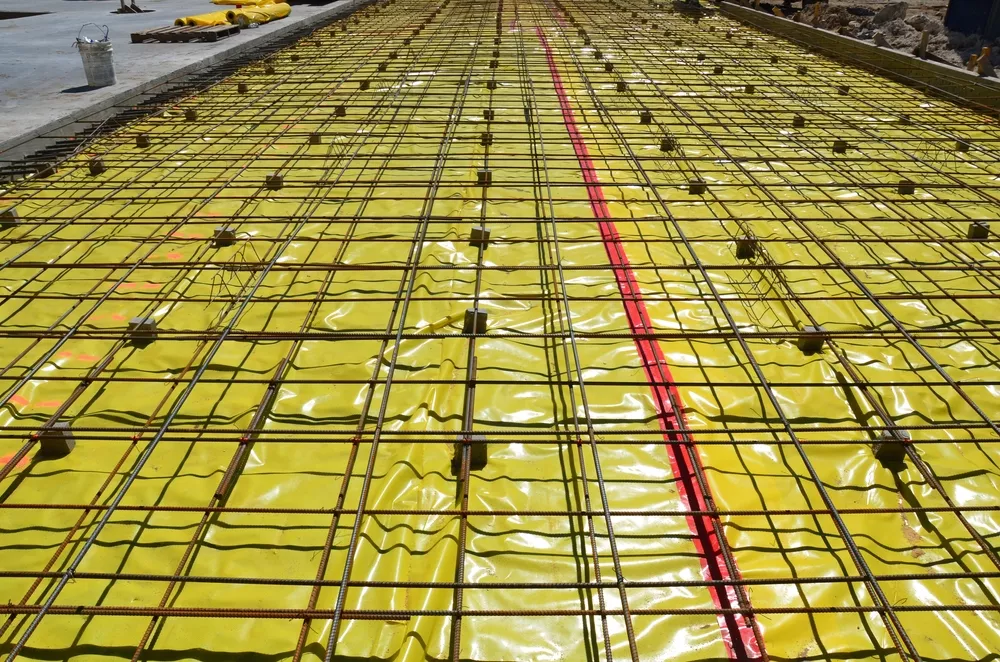
Vapor barriers, often referred to as vapor intrusion barriers or membranes, are passive systems designed to prevent the upward migration of hazardous vapors from contaminated soil or groundwater into buildings. These impermeable liners are typically installed beneath building foundations or slabs, creating a physical separation layer.
How Vapor Barriers Work
The core principle behind a vapor barrier is simple: create an impenetrable physical barrier. These barriers are usually made from high-density polyethylene (HDPE), low-density polyethylene (LDPE), or specialized multi-layer composites. When properly installed, they effectively block volatile organic compounds (VOCs), methane, radon, and other soil gases from entering the indoor environment. Their effectiveness relies heavily on the integrity of the installation – any punctures, tears, or unsealed seams can compromise the barrier’s protective capabilities.
Key Applications and Limitations of Vapor Barriers
Vapor barriers are often the go-to solution in scenarios where:
- Known, Low-Level Contamination: Sites with documented, relatively low concentrations of contaminants where a physical block is deemed sufficient.
- New Construction: Easier and more cost-effective to install during initial construction phases.
- Cost-Efficiency: Generally, the upfront cost of materials and installation for a vapor barrier is lower than an active system.
However, their passive nature presents limitations. They don’t remove contaminants; they only prevent their entry. If the barrier is compromised, or if contamination levels are higher than anticipated, their effectiveness can diminish significantly. They also require rigorous quality control during installation to ensure long-term performance.
The Proactive Approach: Active Mitigation Systems
Active mitigation systems, in contrast to passive barriers, are designed to actively manage and remove subsurface contaminants, thereby reducing or eliminating the potential for vapor intrusion. These systems typically involve mechanical components to create controlled airflow or pressure differentials.
How Active Mitigation Systems Operate
The most common active systems include:
- Sub-Slab Depressurization (SSD) Systems: These are widely used for radon, methane, and VOCs. They involve installing a network of pipes beneath the slab that connect to a fan. The fan creates a negative pressure field beneath the building, drawing soil gases from below the structure and safely venting them to the atmosphere above the roofline. This prevents gases from being drawn into the building.
- Sub-Membrane Depressurization (SMD) Systems: Similar to SSD, but used when a vapor barrier (often a high-performance one) is already in place. The fan creates negative pressure *between* the soil and the membrane, actively drawing gases away from the building envelope.
- Sub-Slab Ventilation/Pressurization: Involves introducing fresh air into the sub-slab area or actively pushing air out to create a positive pressure, preventing contaminant entry.
The continuous operation of a fan or blower is what defines these systems as “active,” requiring ongoing energy consumption and periodic maintenance.
When Active Systems Become the Strategic Choice
Active mitigation systems truly shine when:
- Higher Contamination Levels: Sites with moderate to high concentrations of VOCs, methane, or radon where passive barriers alone might not provide adequate protection.
- Regulatory Requirements: Many state and federal guidelines, particularly for brownfield redevelopment or sites with sensitive receptors, often mandate active systems to ensure robust long-term protection.
- Existing Buildings/Retrofits: While more complex, active systems can often be retrofitted into existing structures more effectively than installing a new vapor barrier.
- Enhanced Confidence: For projects where stakeholders demand the highest level of assurance for indoor air quality, active systems provide a measurable and controllable solution.
Cost, Use Cases, and Regulatory Preferences: A Comparative Look
Choosing between a vapor barrier and an active mitigation system isn’t just about initial cost; it’s about long-term risk management, regulatory compliance, and ultimately, enabling the successful completion of your project.
| Feature | Vapor Barrier (Passive) | Active Mitigation System (e.g., SSD) |
| Mechanism | Physical membrane blocking vapors | Mechanical fan removes or dilutes vapors |
| Primary Cost | Lower upfront cost | Higher installation cost |
| Operating Cost | Minimal | Ongoing (electricity + maintenance) |
| Effectiveness | Depends on barrier integrity | Actively manages vapors & measurable results |
| Use Cases | Low-level contamination, new builds | Higher contamination, retrofits, regulations |
| Regulatory View | Often acceptable for low risk | Frequently required on moderate/high-risk sites |
| Maintenance | Visual inspection | Monitor fan + pressure testing |
From a regulatory standpoint, the EPA and state environmental agencies often show a preference for active systems, especially on sites with known or suspected elevated contaminant levels. For example, ANSI/AARST standards for radon mitigation overwhelmingly recommend active sub-slab depressurization over passive methods for new construction in radon-prone areas, acknowledging the enhanced protection. For VOCs, the decision often hinges on site-specific risk assessments, but active systems are increasingly becoming the standard for ensuring long-term indoor air quality.
For FullTerra Environmental, vapor intrusion protection starts with understanding the site, not defaulting to a single system type. Contaminant levels, soil conditions, building use, and regulatory expectations all influence whether a passive barrier, active mitigation system, or hybrid solution provides the right level of protection.
Strategic Selection: Advancing Your Project
The decision between a vapor barrier and an active mitigation system should be driven by a comprehensive understanding of site conditions, contaminant profiles, regulatory requirements, and project goals. It’s not always an either/or; often, the most robust solution involves a combination—a high-performance vapor barrier integrated with an active sub-slab depressurization system for maximum protection and redundancy. This hybrid approach often presents the most confident pathway forward, especially for complex sites, ensuring long-term safety and compliance.
By carefully evaluating these options with FullTerra Environmental, project teams can unlock development possibilities, transform environmental challenges into manageable milestones, and create safer spaces for future occupants.